
Summer Heat in Orange County: How to Keep Your Dog Safe Starting This Memorial Day
10 min read

- 1.When the Heat Becomes Dangerous for Dogs in Orange County
- 2.Hot Pavement: The Risk Most OC Dog Parents Underestimate
- 3.Recognizing Heat Stroke Before It Becomes an Emergency
- 4.Safe Summer Exercise Windows in Orange County
- 5.What to Look For When Boarding Your Dog This Summer
- 6.Frequently Asked Questions
- 7.Summer in OC Is Long — Plan for It
Memorial Day weekend is when Orange County officially flips the switch. The beach crowds return, the evening light stretches out, and morning temperatures that felt comfortable in April start ticking toward the upper 80s and low 90s by late morning. For OC dog parents, it's also the start of the most dangerous few months of the year for dogs — not from foxtails or rattlesnakes, but from the heat radiating off the surfaces your dog walks on every single day.

Here's the number that matters: when air temperature reaches 85°F, the asphalt on a typical OC sidewalk or parking lot hits around 130°F. At 90°F air temperature, that pavement climbs to 140°F — hot enough to cause burns in under 60 seconds. Orange County routinely hits these thresholds from late May through September, sometimes before 10 a.m. in inland cities like Irvine and Wildomar. This guide covers what to watch for, when to walk, and how to protect your dog through the long OC summer.
When the Heat Becomes Dangerous for Dogs in Orange County
Dogs aren't wired to handle heat the way humans are. They don't sweat — they pant, which is a far less efficient cooling mechanism. On a day that feels warm but manageable to you, your dog is already working significantly harder to stay cool.
The clinical line for heat stress is a core body temperature of 104°F. Heat stroke — the life-threatening emergency — kicks in above 106°F. For reference, a dog's normal resting temperature is between 101°F and 102.5°F. That's a narrow margin between fine and serious.
In Orange County, the specific conditions that accelerate this risk are:
- Asphalt and concrete surfaces. OC's urban infrastructure is heavy on both. Parking lots, sidewalks, and street crossings can all reach dangerous temperatures by mid-morning on a typical summer day.
- Humidity spikes. Marine layer mornings followed by afternoon dry heat — common along the OC coast from Costa Mesa south — suppress panting efficiency right when temperatures are rising.
- Cars. A parked car with the windows cracked reaches 50°F above outside air temperature within 10 minutes. On a 90°F day, that's 140°F inside the vehicle. This applies to cars in shaded spots too, just slightly slower.
- No shade on exposed walks. The wide, sun-exposed sidewalks around the Great Park in Irvine, the commercial strips in Costa Mesa, and the newer development areas in Wildomar offer minimal shade during peak summer hours.
Hot Pavement: The Risk Most OC Dog Parents Underestimate
Paw pad burns are one of the most common summer vet visits in Southern California, and they're almost always preventable. The problem is that many dog parents don't connect a midday walk with injuries that show up hours later — limping, licking paws obsessively, red or blistered pads.
The 5-second rule is the simplest way to know before you go: press the back of your hand flat on the pavement. If you can't hold it there comfortably for five full seconds, it's too hot for your dog's paws. Anything above 125°F can cause burns within 60 seconds of contact.
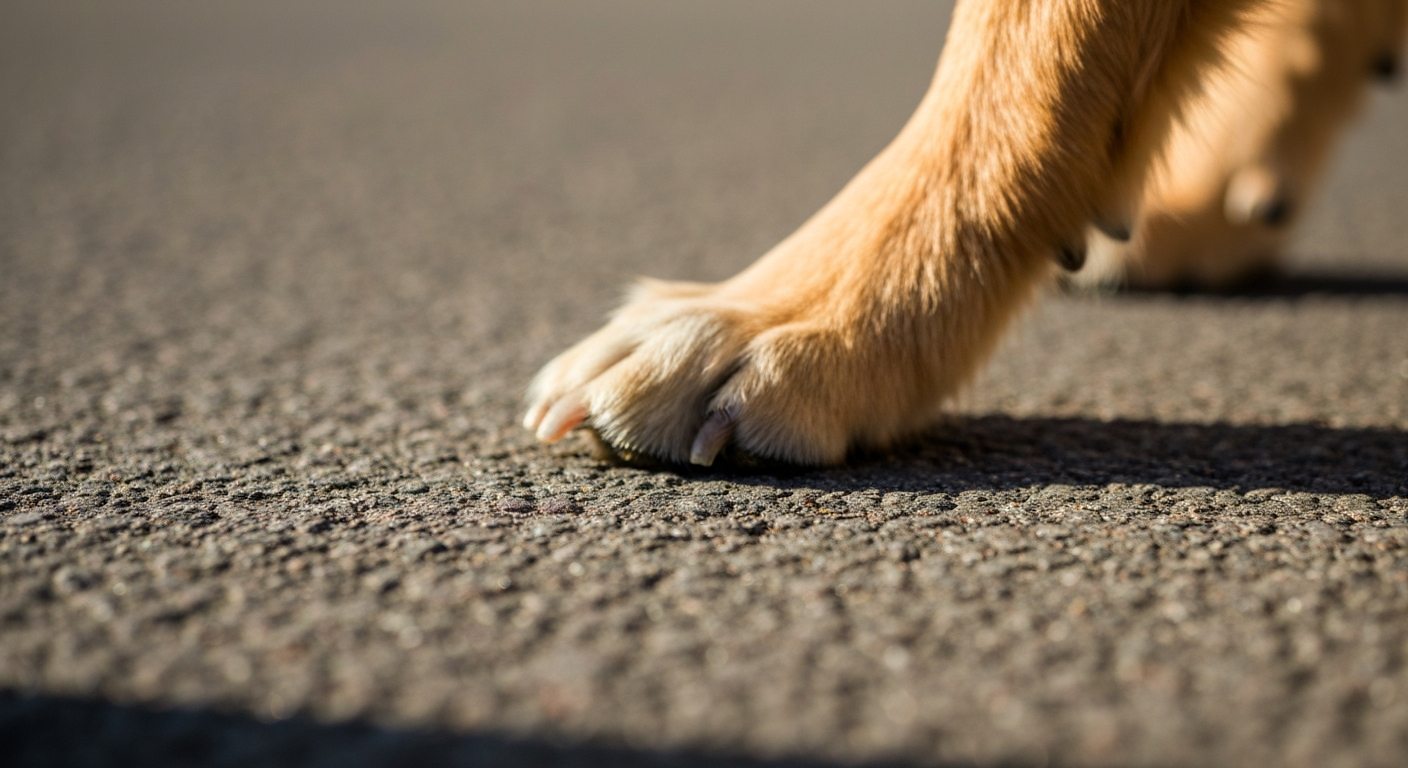
For Irvine and inland South OC cities like Wildomar, peak pavement temperatures typically hit between 11 a.m. and 4 p.m. Coastal cities like Costa Mesa and Dana Point tend to run 5-10°F cooler thanks to the marine layer, but summer afternoons still routinely push pavement above safe levels.
What helps:
- Walk on grass wherever possible. Grass stays significantly cooler than pavement and doesn't retain heat the same way. OC's parks with open turf — Central Bark Dog Park at Irvine Spectrum, Talega Community Park in San Clemente, Heritage Hill Historical Park in Lake Forest — are worth driving to instead of walking on the street during midday.
- Dog booties work. They're not just a fashion item. Booties with rubber soles block heat from reaching the pads entirely. They take a few outings to get used to, but for dogs who walk frequently on asphalt, they're worth the training investment.
- Paw wax provides some protection. Musher's Secret and similar balms create a barrier that helps with heat and abrasion. It's not equivalent to booties on extreme heat days, but it adds a layer.
- Stick to early morning walks. On summer days, the pavement at 7 a.m. is substantially cooler than it is at 9 a.m. — the surface has been radiating heat all night, but sunrise brings a window before the air temperature starts climbing.
Recognizing Heat Stroke Before It Becomes an Emergency
Heat stroke in dogs can escalate from manageable to life-threatening in under an hour. Catching the early signs — rather than waiting for obvious collapse — is what determines the outcome.
Early warning signs to watch for:
- Excessive, frantic panting that doesn't slow down even after stopping exercise
- Drooling more than usual, especially thick or stringy saliva
- Seeking shade, slowing down, or refusing to walk further
- Restlessness or mild disorientation — your dog can't seem to settle
Signs the situation has become urgent:
- Vomiting or diarrhea, sometimes bloody
- Muscle weakness, stumbling, or collapse
- Pale or bright red gums
- Glazed eyes or unresponsiveness
If you see the second group of signs, get your dog to shade and cool water immediately, apply cool (not ice cold) water to the paw pads, inner thighs, and neck, and drive straight to an emergency vet. The closest 24-hour emergency clinics for OC's core cities are BluePearl in Irvine, Mission Viejo Animal Hospital, and VCA Advanced Veterinary Care Center in Tustin. Time matters — don't wait to see if the dog improves on its own.
Safe Summer Exercise Windows in Orange County
The good news: OC summers are very manageable with the right timing. The goal is simple — be outside when the ground is cool, be inside when it's not.
Morning window: Before 9 a.m. is the sweet spot for longer walks. Pavement that cooled overnight is still at or near safe temperature, the air is comfortable, and coastal OC often has a marine layer that keeps it overcast until midmorning. This is the time to take the longer route, hit a park, or do a proper trail walk.
Evening window: After 7 p.m. the pavement starts cooling, especially if you're near the coast. By 8-8:30 p.m. in summer, most OC cities are back in safe range for a standard neighborhood walk. Walks after dark are even better, though visibility matters.
Avoid: 10 a.m. to 6 p.m. for anything longer than a quick bathroom break. If a walk can't be skipped during peak hours, keep it to shaded routes — tree-lined neighborhood streets, covered walkways, or parks with significant canopy cover.
For the safest trails in the area, our guide to dog-friendly hiking spots in Irvine and Orange County covers which routes have shade, water access, and surfaces that stay cooler through the summer.
What to Look For When Boarding Your Dog This Summer
Summer boarding season in OC runs from Memorial Day through Labor Day, and the weather is relevant to where and how your dog stays when you're traveling. Not every sitter setup is equal in the heat.
When evaluating options for summer care, a few questions are worth asking:
- Is the dog primarily indoors during midday? A climate-controlled home is a fundamental safety feature in June, July, and August in Orange County. Air conditioning isn't optional during a heat event.
- How is outdoor time structured? Sitters who understand OC summers typically schedule walks before 9 a.m. or after 7 p.m. and limit outdoor time during peak hours.
- Is fresh water always available? Dogs drink more in the heat. A sitter who monitors water intake and refills throughout the day is worth noting.
- Is there any covered outdoor space? A shaded patio, covered yard, or access to a garage can extend safe outdoor time when temperatures are borderline.
For a broader look at how to evaluate sitter fit — not just for summer but year-round — our guide to choosing the safest dog sitter in Orange County covers what questions to ask before you hand over a key.
Frequently Asked Questions
Q: How hot does it actually get in Irvine and inland OC cities during summer? A: Irvine and Wildomar regularly hit 90-100°F on peak summer days, often spiking above 100°F during Santa Ana conditions in August and September. Coastal cities like Costa Mesa and San Juan Capistrano are typically 5-15°F cooler thanks to the marine layer, but still reach pavement-danger temperatures by late morning most summer days.
Q: Is the 5-second hand test reliable? A: Yes, and it's the most practical field check available. Press the back of your hand on the pavement surface — not just the sidewalk corner, but the open stretch where your dog will be walking. If it's uncomfortable after five seconds, skip the walk or find a shaded grass route.
Q: What if my dog seems fine during a midday walk? A: Dogs are stoic and often don't signal distress until the situation is serious. A dog who keeps pace and appears energetic can still be developing early heat stress, and paw pad burns may not cause visible limping until hours after the walk. Normal behavior is not the same as safe conditions.
Q: Are certain dog breeds more at risk in OC's summer heat? A: Brachycephalic breeds — bulldogs, pugs, French bulldogs, Boston terriers, and similar flat-faced dogs — are significantly higher risk because their airway structure limits panting efficiency. Thick double-coated breeds (huskies, malamutes, Bernese mountain dogs) also struggle in sustained heat. That said, any dog can overheat — individual fitness, age, health status, and hydration all play roles.
Summer in OC Is Long — Plan for It
Orange County's hot season runs roughly Memorial Day through the first week of October. That's four and a half months of early-morning walks, midday shade breaks, and evening check-ins on pavement temperature. The dogs who thrive through OC summers are the ones with owners — and sitters — who build these habits early and stay consistent.
If you're heading out of town this summer and need someone to keep your dog comfortable through the heat, the independent sitters on Ruh-Roh Retreat live and work right here in Orange County. Many know the seasonal rhythms, structure walks around the weather, and prioritize keeping dogs cool, hydrated, and indoors when the pavement is telling you to stay inside. Plenty of platforms make it easy to find a sitter; Ruh-Roh Retreat makes it easier to find the right one — a curated marketplace where you can compare Home Environments, Care Styles, and experience to choose the sitter whose summer setup fits your individual dog.
Looking for a trusted sitter who knows how to handle OC summers? Browse independent sitters near you on Ruh-Roh Retreat.
For more on keeping your dog safe through OC's seasonal hazards year-round, see our guides on foxtail season in Orange County and rattlesnake season safety.
You Might Also Like
 8 min
8 minJun 30, 2026
July 4th in Orange County: Where to Board Your Dog During Fireworks Season
July 4th is the single biggest day of the year for lost pets nationwide. Here's how Orange County pet parents in Irvine, Costa Mesa, San Juan Capistrano, and Wildomar can plan dog boarding around fireworks season — plus how to keep an anxious dog safe at home.
Read More →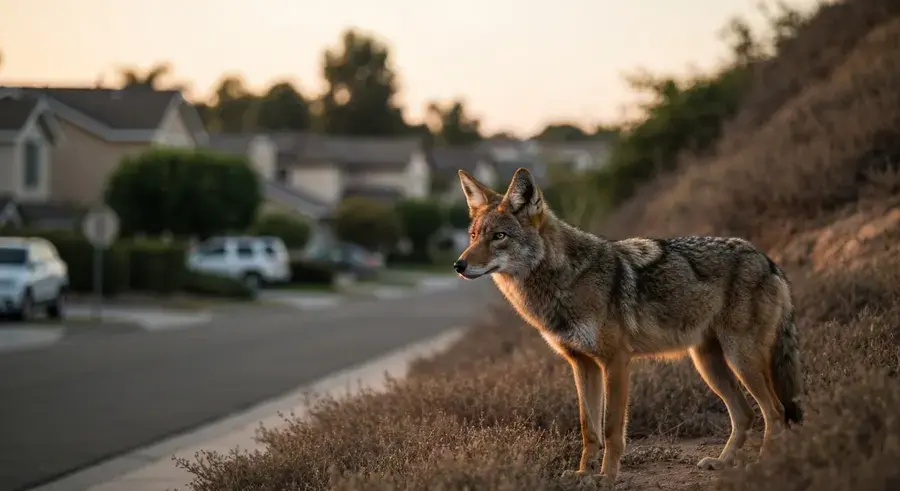 12 min
May 26, 2026
Coyote Season in Orange County: How to Keep Your Dog Safe Through Summer
Late spring through summer is peak coyote-conflict season in Orange County. Here's where coyote activity is highest in Irvine, Costa Mesa, San Juan Capistrano, and Wildomar — and what OC dog parents can do to keep dogs safe.
Read More → 9 min
9 minMay 30, 2026
Dog-Friendly Beaches in Orange County: A Pet Parent's Summer 2026 Guide
Summer is officially open in OC. Here's the up-to-date local guide to dog friendly beaches in Orange County — where leashes come off, the hours that catch people out, and how to plan beach season around travel.
Read More →